Showing posts with label Russia. Show all posts

Aerial slices II: Rivers

northern Siberia to the east of the Taz Rivernorthern Siberia to the east of the Taz River


This image pair shows lakes dotting the tundra in northern Siberia to the east of the Taz River (bottom left). The tundra vegetation is colored a faded red, while lakes appear blue or blue-green. White arrows point to lakes that have disappeared or shrunk considerably between 1973 (top) and 2002 (bottom). After studying satellite imagery of about 10,000 large lakes in a 500,000-square-kilometer area in northern Siberia, the scientists documented a decline of 11 percent in the number of lakes, with at least 125 disappearing completely. These images use near-infrared, red, and green wavelength data from the Landsat MSS sensor (1973) and the Landsat ETM+ sensor (2002). - NASA Observatory

Very much inspired by this amazing blog post by pruned (which I only discovered after my sister sent me the link)

Cosmic Communist Constructions Photographed by Frédéric Chaubin


In CCCP: Cosmic Communist Constructions Photographed Frédéric Chaubin reveals 90 buildings sited in fourteen former Soviet Republics which express what he considers to be the fourth age of Soviet architecture. His poetic pictures reveal an unexpected rebirth of imagination, an unknown burgeoning that took place from 1970 until 1990. Contrary to the 1920s and 1950s, no “school” or main trend emerges here. These buildings represent a chaotic impulse brought about by a decaying system. Their diversity announced the end of the Soviet Union.


Taking advantage of the collapsing monolithic structure, the holes in the widening net, architects went far beyond modernism, going back to the roots or freely innovating. Some of the daring ones completed projects that the Constructivists would have dreamt of (Druzhba Sanatorium, Yalta - above), others expressed their imagination in an expressionist way (Palace of Weddings, Tbilisi). A summer camp, inspired by sketches of a prototype lunar base, lays claim to Suprematist influence (Prometheus youth camp, Bogatyr). Then comes the "speaking architecture" widespread in the last years of the USSR: a crematorium adorned with concrete flames (Crematorium, Kiev), a technological institute with a flying saucer crashed on the roof (Institute of Scientific Research, Kiev), a political center watching you like Big Brother (House of Soviets, Kaliningrad). This puzzle of styles testifies to all the ideological dreams of the period, from the obsession with the cosmos to the rebirth of identity. It also outlines the geography of the USSR, showing how local influences made their exotic twists before the country was brought to its end.

text via
Taschen

War and Peace | Война и мир | Voyna i mir, Part 2: Natasha Rostova (Part ii)

War and Peace. Part 2
War and Peace (Part 2)
War and Peace. Part 2
War and Peace, Война и мир, Voyna i mir
War and Peace. Part 2

War and Peace | Война и мир | Voyna i mir, Part 2: Natasha Rostova (Part i)

War and Peace. Part 2
War and Peace (Part 2)
War and Peace. Part 2

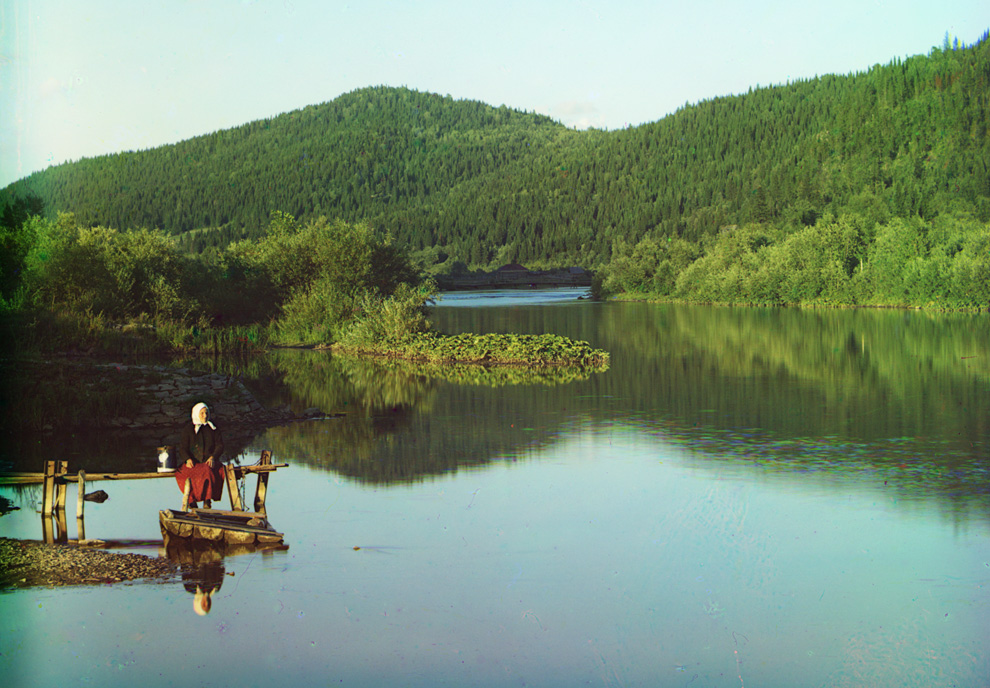
Historic Colour Photographs

The photographs of Russian chemist and photographer, Sergei Mikhailovich Prokudin-Gorskii, show Russia on the eve of World War I and the coming of the revolution. From 1909-1912 and again in 1915, Prokudin-Gorskii travelled across the Russian Empire, documenting life, landscapes and the work of Russain people. His images were to be a photographic survey of the time. He travelled in a special train car transformed into a dark room to process his special process of creating color images, a technology that was in its infancy in the early 1900’s. Prokudin-Gorskii left Russia in 1918, after the Russian Revolution had destroyed the Empire he spent years documenting. To learn more about the Prokudin-Gorskii, the process he used to create the color photographs, and see his collection, you can visit the Library of Congress, who purchased his glass negatives in 1948 after his death in 1944.


VIA and HERE


These images, by photographers of the Farm Security Administration/Office of War Information, are some of the only color photographs taken of the effects of the Depression on America’s rural and small town populations. The photographs are the property of the Library of Congress and were included in a 2006 exhibit Bound for Glory: America in Color.


VIA

Blog Archive